
- VIAC
-
ARBITRATION
- Arbitrate at VIAC
- VIAC eCase
- Combination of Arbitration and Mediation
- International Arbitration
- Resources
- NEWS & EVENTS
- Contact
-




On August 28, 2026, in Ho Chi Minh City, the Vietnam International Arbitration Centre (VIAC), in collaboration with the Investment and Trade Promotion Centre of Ho Chi Minh City (ITPC), organized a training course titled “Contract digitalization solutions: Clause structure and risk control”. This event was part of the Legal Management Series in Ho Chi Minh City 2026 (LMS 2026).

The training course was held in-person with a full day program, focused on two primary aspects: (i) designing contracts adaptable to the digital environment and (ii) implementing electronic contracts in actual business operations.
In 2026, LMS marked its fourth year of implementation, centering on the theme “Reshaping transactions in the digital age”. The series featured two main activity groups: “Interaction - Connection” and “Training – Application”, exploring legal and practical issues across three sectors: Finance, Commerce, and Logistics. Through this program series, VIAC and ITPC aimed to assist enterprises in adopting appropriate electronic applications in contractual transactions, identifying legal issues arising in the digital context, and enhancing their capacity to draft contractual provisions and manage practical implementation risks.
Digitalizing contracts is not simply about the transition from “paper” to “electronic”
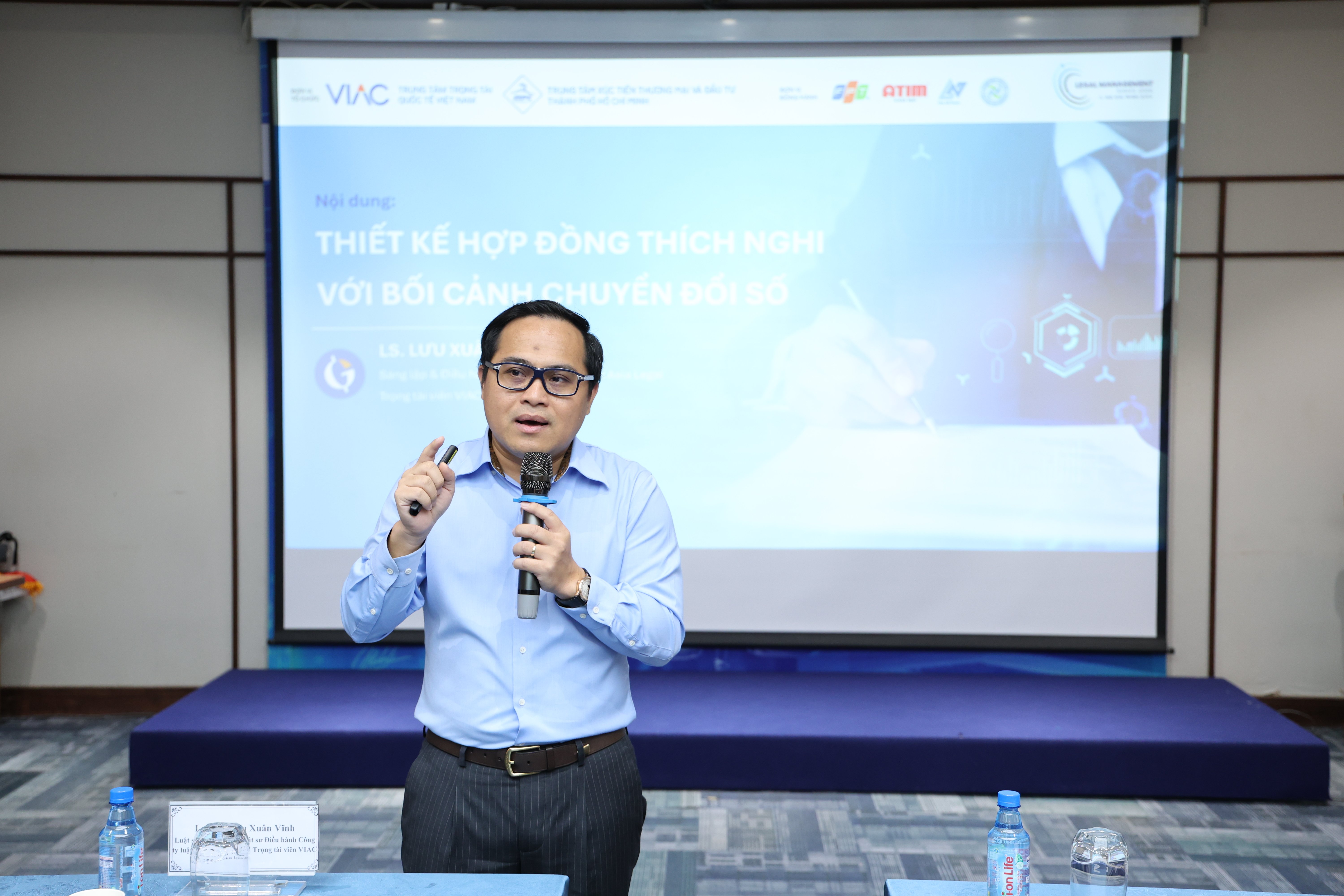
Mr. Luu Xuan Vinh - Founder and Managing Partner of Asia Legal LLC, VIAC’s Listed Arbitrator
Opening the training course, Mr. Luu Xuan Vinh - Founder and Managing Partner of Asia Legal LLC, VIAC’s Listed Arbitrator, focused on clarifying the legal issues enterprises must identify when transitioning from traditional to electronic contracts.
The discussion highlighted that the digitalization process should not be understood merely as replacing a paper contract with a data file or an online signing action. Before transitioning, enterprises must concurrently consider multiple factors. These range from the legal conditions of the transaction, contract form, methods of expressing intent, and the signatory's authority, to the validity of electronic signatures and the capability to store, retrieve, and use data as evidence in the event of a dispute.
Based on this approach, participants were guided on categorizing transactions according to their suitability for digitalization. This helps determine which transactions can be converted immediately, which require a phased roadmap, and which cases still necessitate traditional methods or a hybrid model. Instead of aiming for full digitalization from the outset, enterprises can select an appropriate scope, ranging from digitalizing specific steps to transforming the entire contract formation process.
Another notable topic of the session concerned “bridge clauses” (“điều khoản bắc cầu”) - contractual provisions that connect traditional and electronic transaction methods. The speaker analyzed how to draft agreements regarding the equivalent validity of electronic documents, signatures, and acknowledgments; rules for determining document versions and order of precedence; mechanisms for sending, receiving, and confirming records; as well as contingency plans in the event of a technological incident or system failure.
From legal foundations to practical implementation in enterprises
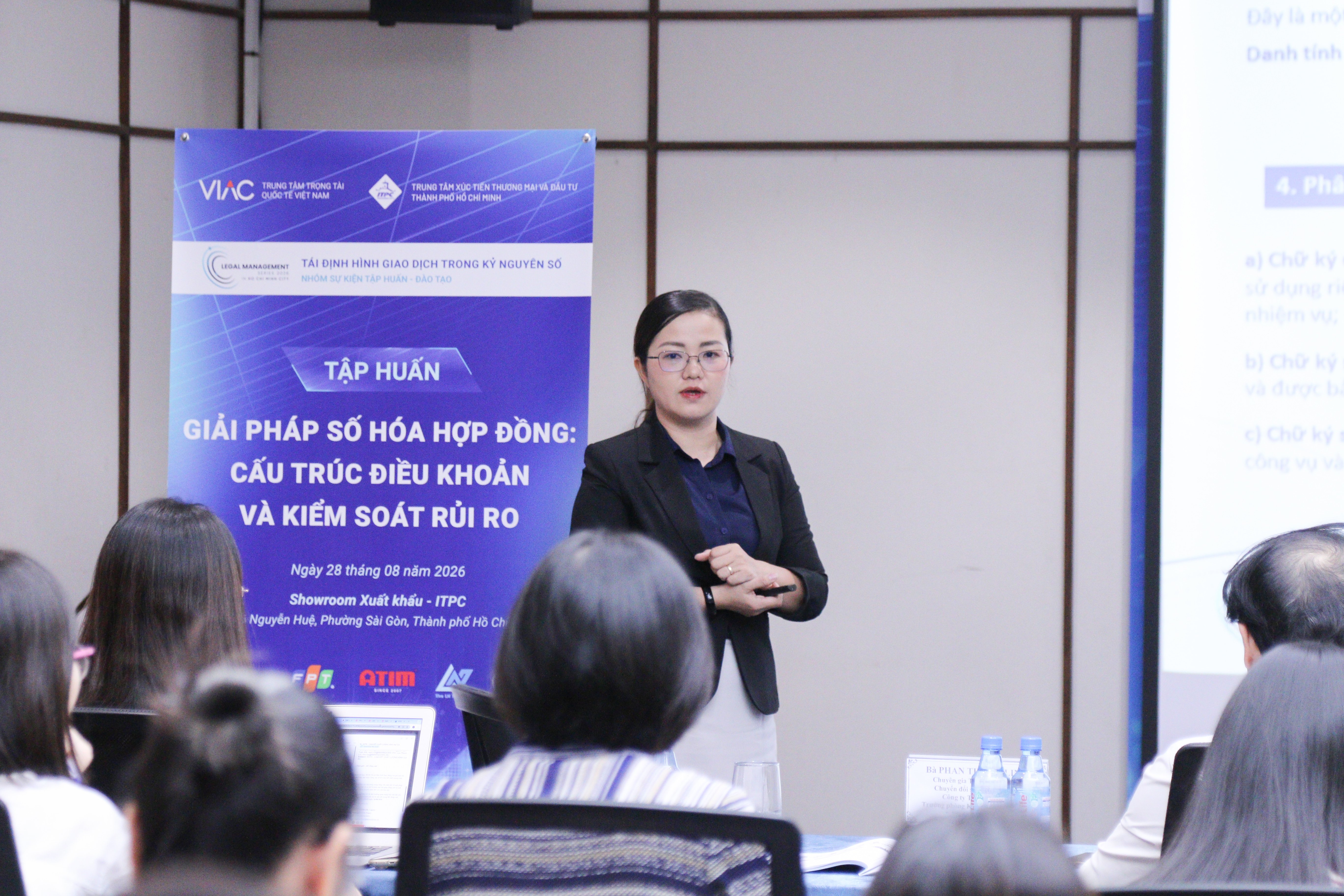
Ms. Phan Thi My Linh - Head of Business for “Make by FPT IS” Solutions at FPT IS Company Limited (a member of FPT Corporation)
The presentation by Ms. Phan Thi My Linh - Head of Business for “Make by FPT IS” Solutions at FPT IS Company Limited (a member of FPT Corporation), addressed the question of what enterprises need to prepare to ensure an electronic contract system operates effectively.
From a technology implementation perspective, Ms. Linh emphasized that a contract saved as a PDF does not equate to a complete electronic contract process. The validity of an electronic transaction is built upon a chain of controls: correctly identifying the participants, selecting appropriate authentication and signing methods, ensuring data integrity, recording the transaction time, and preserving sufficient evidence for retrieval when necessary.
Therefore, Ms. Linh noted that the goal of the transition should not solely be “faster signing,” but rather redesigning the entire transaction process to be faster, more transparent, and highly controllable. Enterprises need to review contract templates, participating entities, signing authority, and approval workflows, risk categorization rules, and methods for storing and utilizing data after the contract is signed.
Effective digitalization begins with risk management and process design
Through the training course, participants could draw a key takeaway: implementing electronic contracts is an intersection of legal requirements, technology, and management processes. While technology can help enterprises shorten signing times and reduce operational costs, the effectiveness of the transition is only secured when enterprises concurrently design authorization, audit trailing, storage, and contingency mechanisms that align with the risk level of each transaction.
Accordingly, rather than digitalizing simultaneously across the board, enterprises can start with high-frequency transactions that have relatively standardized processes and a clear return on investment, before gradually expanding to more complex transactions. This approach also helps enterprises maintain a balance between transaction speed and legal safety.
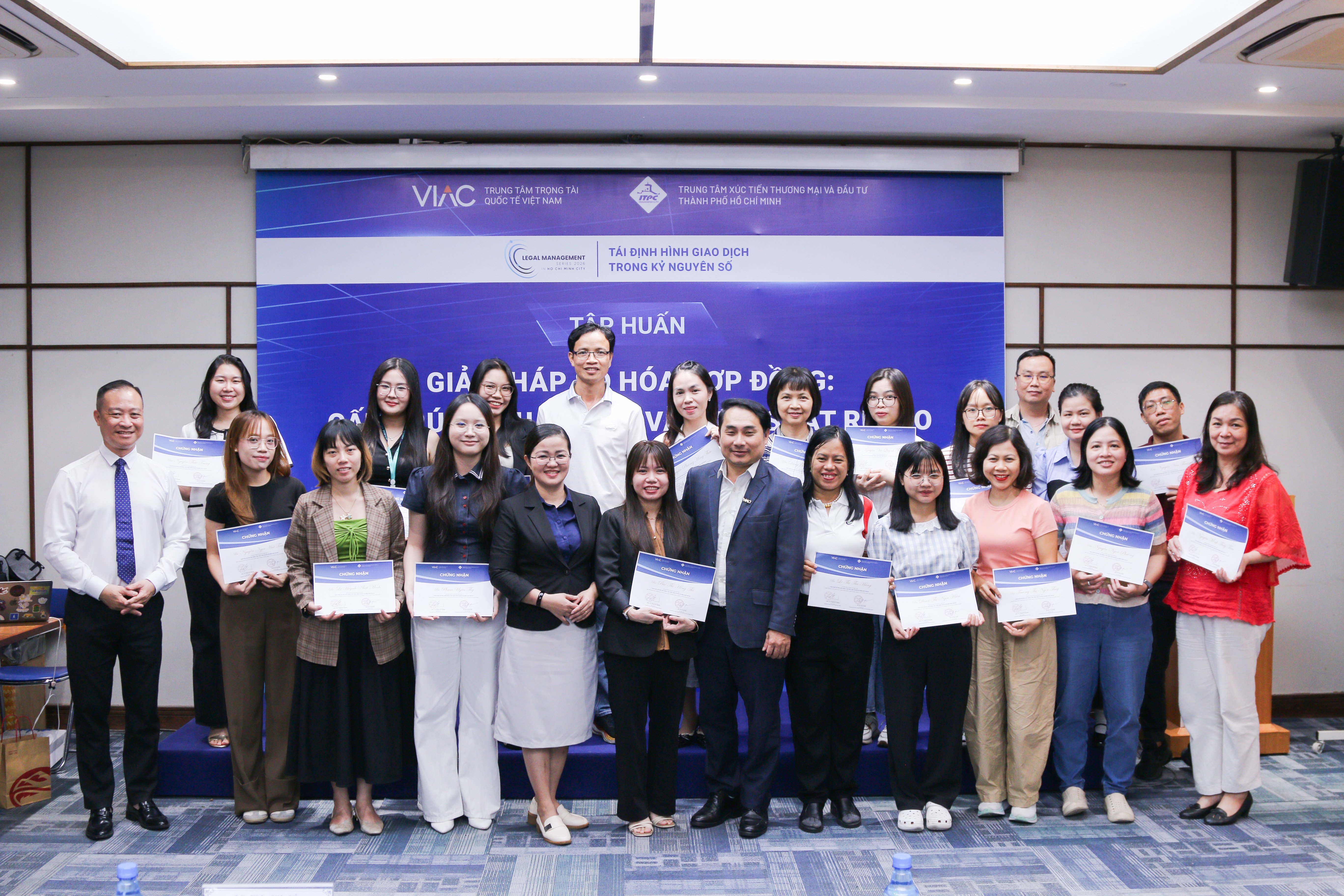
The training course concluded with a Q&A session addressing practical scenarios and certificates award ceremony for the participants. This was also the final activity of the LMS 2026, closing a series defined by its consistent focus on connecting legal requirements with practical business operations. Through this, the series aimed to support enterprises in enhancing transaction management capacity, controlling risks, and proactively preventing disputes in the context of digital transformation.